Roopkund Trek – The Legendary Mystery Lake of Uttarakhand
When one talks about trekking in Uttarakhand, the names Milam Glacier, Har Ki Dun, or Valley of Flowers often take the spotlight. But hidden deep in the Garhwal Himalayas lies a trail that is both mystical and breathtakingly beautiful – the Roopkund Trek, also known as the “Mystery Lake Trek.”
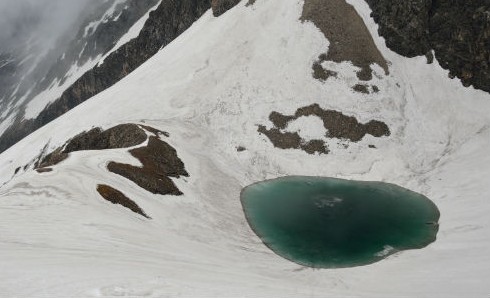
At 5,029 meters (16,499 ft), Roopkund is a glacial lake shrouded in myths and legends. The lake is famously known for the hundreds of human skeletons discovered at its bed – believed to be from a royal pilgrimage group struck by a hailstorm nearly a thousand years ago. Today, trekkers come not only to witness this eerie yet fascinating history but also to enjoy one of the most rewarding Himalayan journeys.
The trek combines dense oak and rhododendron forests, remote villages, alpine meadows (bugyals), high ridges, and a thrilling climb to the glacial Roopkund Lake. It offers unforgettable views of Mt. Trishul, Nanda Ghunti, Chaukhamba, and countless snow-capped peaks.
If Valley of Flowers is about vibrant blooms and Kedarkantha about winter charm, then Roopkund is about mystery, adventure, and grandeur. It is a trail for those who seek not just beauty but also legends embedded in Himalayan wilderness.
Highlights of the Roopkund Trek
Roopkund Lake (5,029 m / 16,499 ft): The legendary “Mystery Lake” with centuries-old skeletons visible when the ice melts.
Bedni Bugyal & Ali Bugyal: Two of the largest high-altitude meadows in Asia – rolling green pastures offering sweeping views.
Sacred Traditions: The trek passes through Wan village and Bedni Kund, both deeply tied to local mythology and the Nanda Devi Raj Jat Yatra (a once-in-12-year pilgrimage).
Panoramic Himalayan Views: Crystal-clear sightings of Trishul, Nanda Ghunti, Chaukhamba, Neelkanth, and Kedarnath peaks.
Diverse Landscapes: From oak-rhododendron forests to alpine bugyals, ridges, and snowfields.
Adventure & Mythology Combined: A unique trek where natural beauty meets ancient Himalayan legends.
Moderate–Challenging Terrain: Perfect for trekkers with some experience who want to push higher into the Garhwal Himalayas.
Best Season: May–June (snow patches, rhododendron blooms) and September–October (clear skies, crisp views).
Roopkund Trek Itinerary (7 Nights / 8 Days)
Day 1: Arrival at Kathgodam – Drive to Lohajung (220 km, 9–10 hrs) | Altitude: 7,600 ft
Your adventure begins at Kathgodam Railway Station, where you’ll be greeted by the Himalayan drive that sets the tone for the trek. The road snakes through Bhimtal, Almora, Kausani, and Tharali before finally reaching Lohajung, a quaint mountain village and the trek base.
En route, admire terraced farms, gushing rivers, and pine-covered ridges. By evening, check into a guest house at Lohajung. Here you’ll receive a briefing about the trek ahead.
Overnight stay at Lohajung in a guesthouse.
Day 2: Lohajung to Didna Village (8 km trek, 5–6 hrs) | Altitude: 8,500 ft
The first day of trekking begins after breakfast. The trail descends to the Bedni River, crossing rustic wooden bridges and small hamlets. From here, the path climbs steeply through forests of oak and rhododendron, alive with birdsong and flowers during spring.
By afternoon, reach Didna Village, a small settlement offering a glimpse into the simple life of mountain folk. The locals here often narrate legends of Nanda Devi and Roopkund, adding cultural flavor to your trek.
Overnight stay in homestays or tents.
Day 3: Didna Village to Ali Bugyal (10 km, 6–7 hrs) | Altitude: 11,000 ft
One of the most scenic days of the trek! The trail gradually climbs through oak and birch forests before opening into the vast alpine meadows of Ali Bugyal. Considered one of the largest high-altitude grasslands in Asia, Ali Bugyal looks like an endless green carpet in summer and a golden-brown stretch in autumn.
On clear days, the Trishul and Nanda Ghunti peaks rise dramatically in the distance, creating postcard-perfect views. Grazing horses and sheep add to the charm of this meadow.
Camp overnight on the bugyal, under a starlit sky.
Day 4: Ali Bugyal to Bedni Bugyal (6 km, 3–4 hrs) | Altitude: 11,500 ft
A relatively easy and short walk across rolling meadows leads you to Bedni Bugyal, another vast alpine expanse steeped in mythology. Bedni Bugyal holds great religious significance as the site of Bedni Kund, a sacred pond linked with the Nanda Devi Raj Jat Yatra, a pilgrimage that takes place once every twelve years.
Evening exploration of the bugyal offers breathtaking sunset views, with the Himalayas glowing in golden hues.
Overnight stay at Bedni Bugyal campsite.
Day 5: Bedni Bugyal to Bhagwabasa (10–11 km, 6–7 hrs) | Altitude: 14,100 ft
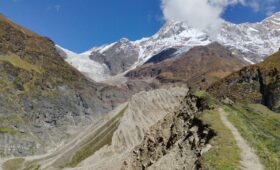
The trek now becomes steeper and more challenging. Leaving the meadows behind, the trail passes through rocky ridges and snow patches (depending on season). The ascent to Bhagwabasa is thrilling, with the air thinning and the landscape turning stark.
Bhagwabasa is a rocky camping zone located just below Roopkund. Here, temperatures drop significantly, and nights are often freezing.
Overnight stay in tents at Bhagwabasa.
Day 6: Bhagwabasa to Roopkund (16,499 ft) and return to Bedni Bugyal (16 km round trip, 8–9 hrs)
This is the summit day – the most awaited part of your trek. Start before dawn, carrying packed breakfast. The climb to Roopkund is steep and often snowy, requiring careful steps on the zig-zag trail.
After 3–4 hours, you reach Roopkund Lake (16,499 ft), nestled in a hollow and surrounded by snow-clad peaks. On clear days, the reflection of Mt. Trishul shimmers in the water. When the ice melts, human skeletons and artifacts can be seen – a haunting reminder of the ancient tragedy that gave the lake its name.
Spend some time soaking in the eerie beauty and grandeur before descending. Return via Bhagwabasa to Bedni Bugyal, where the comfort of meadows awaits.
Overnight stay in tents.
Day 7: Bedni Bugyal to Lohajung (12–13 km, 6–7 hrs)
Retrace your steps down through the forests and meadows, with one last chance to capture the beauty of Ali Bugyal. Descend further to Wan village, the trailhead, where vehicles will be waiting to take you back to Lohajung.
Evening at leisure – enjoy local food and share stories of the trek around a warm fire.
Overnight stay at Lohajung guest house.
Day 8: Lohajung to Kathgodam (220 km, 9–10 hrs drive)
After breakfast, begin the long but scenic drive back to Kathgodam Railway Station. Bid farewell to the mountains, carrying with you memories of mysterious lakes, endless bugyals, and Himalayan legends.
Why Choose the Roopkund Trek?
Unlike many other Himalayan treks, Roopkund offers a rare mix of natural grandeur, thrilling adventure, and ancient mystery. Here’s why trekkers keep this on their bucket list:
A chance to witness the mystical skeleton lake – a natural and historical wonder.
The magical Ali & Bedni Bugyals – unparalleled in beauty, among Asia’s finest meadows.
Perfect balance of culture, mythology, and adventure.
Moderate–challenging grade makes it rewarding without being extremely technical.
Compact duration – a week-long trek suitable for most holiday plans.
Essential Trek Information
Maximum Altitude: 5,029 m (16,499 ft)
Trek Duration: 7 Nights / 8 Days (Kathgodam to Kathgodam)
Grade: Moderate to Challenging (requires good fitness and prior trekking experience)
Best Season: May–June (spring, snow patches, rhododendron blooms) and September–October (clear skies, stable weather)
Nearest Railhead: Kathgodam (well-connected to Delhi by overnight trains)
Starting Point: Lohajung village
Accommodation: Mix of guesthouses (Lohajung, Didna, Wan) and camping (Bugyals, Bhagwabasa).